British Garden Birds: A Beginner’s Guide to the 15 Most Common Species
Identify the fifteen most common British garden birds by plumage, behaviour, song and feeder preferences, with quick tips for telling similar species apart.
Fill a feeder, sit still for ten minutes, and your garden starts to tell you who lives there. Most British gardens attract a predictable cast of birds, whatever their size. Once you can name the regulars reliably, everything else gets easier. Here are the fifteen species you are most likely to see, how to tell them apart, and what each one wants from a feeder.
Four things to notice before you name anything
Beginners try to identify birds by plumage alone and get stuck. Work in this order instead.
- Size and silhouette — compare with something familiar: smaller than a sparrow, sparrow-sized, blackbird-sized, pigeon-sized.
- Behaviour — does it hang upside down, hop along the ground, cling to a peanut feeder, or chase everything else away?
- Pattern — pick out one or two bold features (a red breast, a white wing bar, a black collar) rather than memorising the whole bird.
- Sound — even a rough note helps: two clear notes repeated, a tinkling chatter, a wheeze. Learn one call at a time.
Keep binoculars by the window and avoid moving fast behind the glass. The first hour after sunrise is the busiest.
The tits: acrobats and quick thieves
The blue tit is usually the first bird a beginner learns: blue cap, white cheeks, black eye-stripe, yellow breast. It hangs upside down on fat balls and sunflower hearts, and rarely sits still.
The great tit is bigger, with a black head, bright white cheeks and a black stripe down its yellow belly. Its ringing two-note song, often written as "teacher, teacher", is one of the first sounds of spring.
The coal tit looks like a small, grey great tit with a white patch on the back of the neck. Watch its habit of taking one seed and flying off to eat it in the hedge.
Long-tailed tits arrive as a chattering family party — pink, black and white, with a tail longer than the body. They rarely settle, so suet pellets work better than seed.
Robins, blackbirds and the ground crew
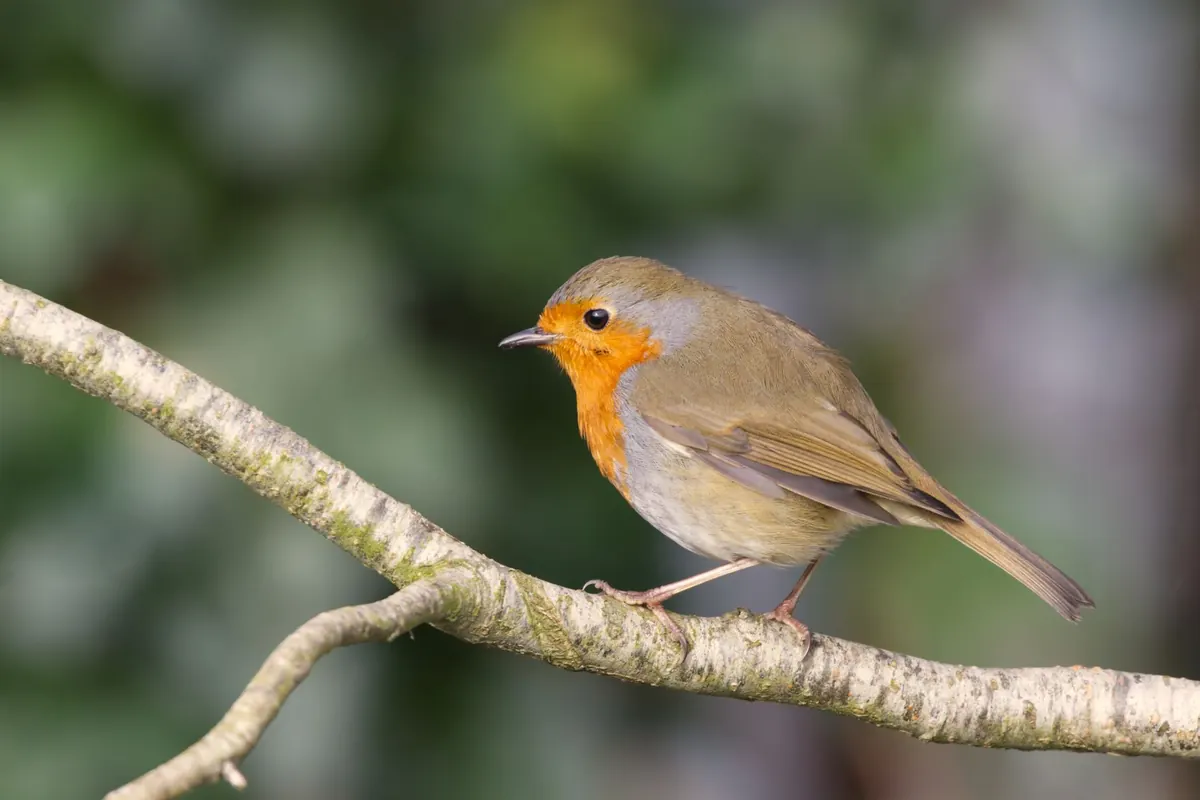
A robin needs no introduction, and both sexes wear the orange-red breast. Tame and territorial, it sings for much of the year. Mealworms on a ground tray will win it over.
The male blackbird is all black with a yellow-orange bill and eye-ring; the female is brown with a mottled breast. It hops across the lawn, flicks through leaf litter, and delivers a low, flute-like song.
The song thrush is smaller and browner than the mistle thrush, with arrow-shaped spots on the breast. It repeats each phrase two or three times, and smashes snails on a favourite stone.
Starlings arrive in noisy groups, glossy with pale speckles in winter and a yellow bill by spring. They mimic other birds and can clear a fat ball before breakfast.
Sparrows, dunnocks and doves
House sparrows live in chirruping colonies. The male has a grey crown and black bib; the female is plain buff-brown. They take seed, crumbs and most things going, and dust-bathe in dry soil.
The dunnock is easily overlooked: grey head and breast, streaky brown back, thin pointed bill. It shuffles along the ground beneath the feeder rather than perching, flicking its wings.
Collared doves are slim and sandy-grey with a thin black half-collar; listen for a three-note coo. Woodpigeons are much plumper, with a pinkish breast and bold white wing bars that show in flight.
Finches: colour, chatter and small seeds
Goldfinches have a red face, black and white head and a gold bar on the wing. They chatter in small flocks and are devoted to sunflower hearts and niger.
Greenfinches are chunky and greenish with yellow wing edges, and give a wheezy "dzwheee". Bold and often bossy, they prefer sunflower hearts.
Chaffinches feed on the ground below the feeder. The male is pinkish with a blue-grey cap and a white wing bar; the female is plainer. In winter, small flocks of streaky siskins join the goldfinches in some gardens.
Telling the lookalikes apart
- Blue tit or great tit? Blue tit: blue cap, yellow chest, tiny. Great tit: black cap, white cheeks, black belly stripe, noticeably bigger.
- House sparrow or dunnock? Sparrows are noisy and sociable, with stout conical bills and no breast streaking. Dunnocks are quiet and solitary, with a thin bill and a grey, unstreaked breast.
- Song thrush or mistle thrush? Song thrush: smaller, warm brown, neat arrow-shaped spots. Mistle thrush: greyer, larger, blotchier spots, and it sings from a treetop in poor weather.
- Collared dove or woodpigeon? Collared dove is slim with a black neck collar. Woodpigeon is plump with a pink breast and white wing bars in flight.
- Greenfinch or siskin? Greenfinch is bulky with a thick pale bill; siskin is small and streaky, with a black cap and a forked tail.
What to put out, and how to keep things clean
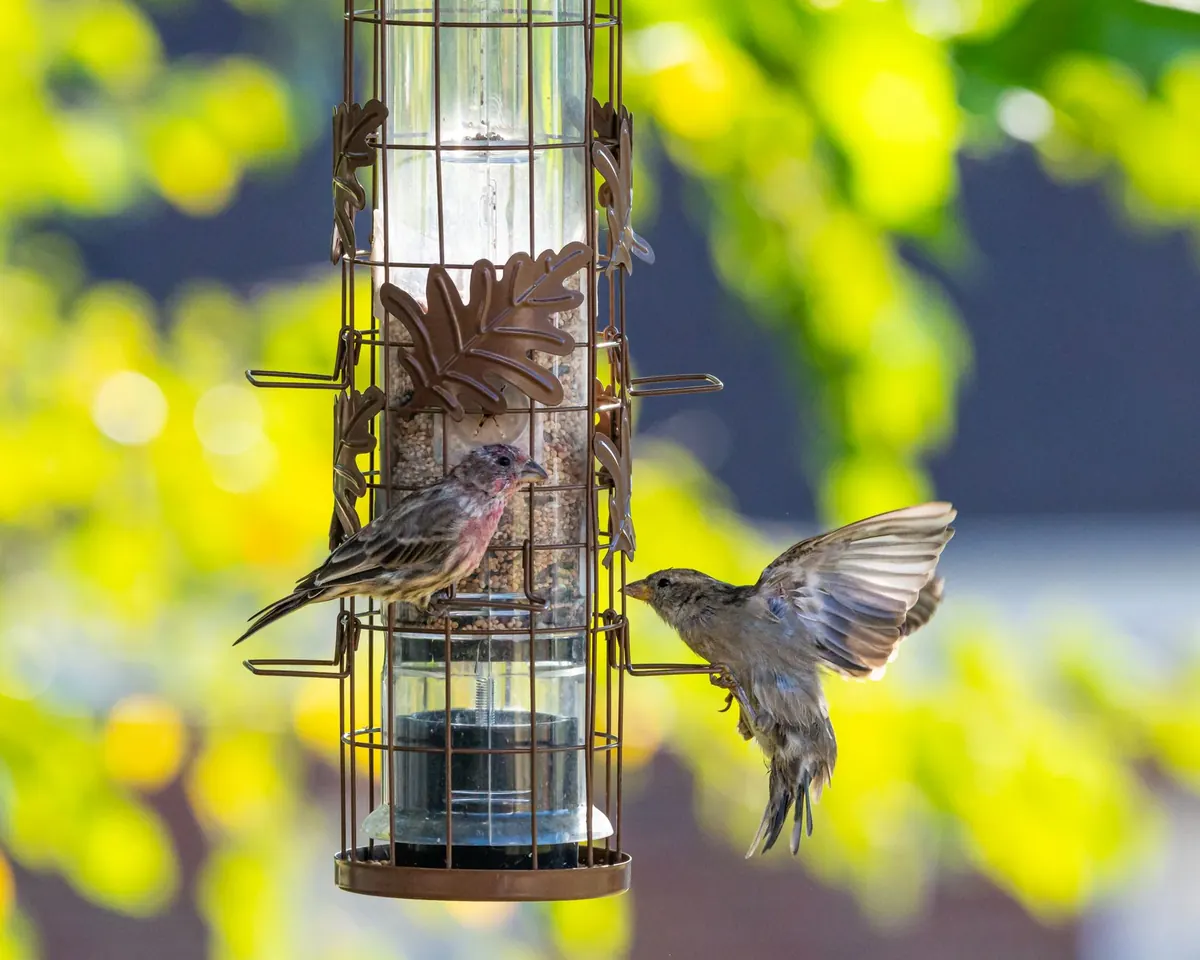
- Sunflower hearts — the best all-round food, no mess, taken by tits, finches and sparrows.
- Peanuts — mesh feeder only, and never salted or roasted.
- Fat balls and suet pellets — winter staples, especially for long-tailed tits.
- Mealworms — robins, blackbirds and starlings; soak dried ones first.
- Water — a shallow dish, scrubbed and refilled, matters as much as food.
Clean feeders every couple of weeks with hot soapy water, rinse well and let them dry; do the water dish daily. If you see a bird sitting fluffed up and unusually tame at a feeder, take the feeders down for a fortnight, clean everything and let the area rest. Diseases such as trichomonosis spread quickly where birds crowd together, and routine hygiene does most of the work.
Start with one feeder and a notebook
Put out a single feeder near a hedge or shrub, so birds have somewhere to retreat to, and note what you see each week — date, weather, first visitor. Within a month you will recognise your regulars by behaviour before you look at their plumage, and you will start to spot the changes: goldfinch flocks in autumn, blue tits inspecting nest boxes in February, siskins turning up in a cold snap. That is when birdwatching stops being a list and becomes a habit.
Photo: Phil Mitchell / Pexels